
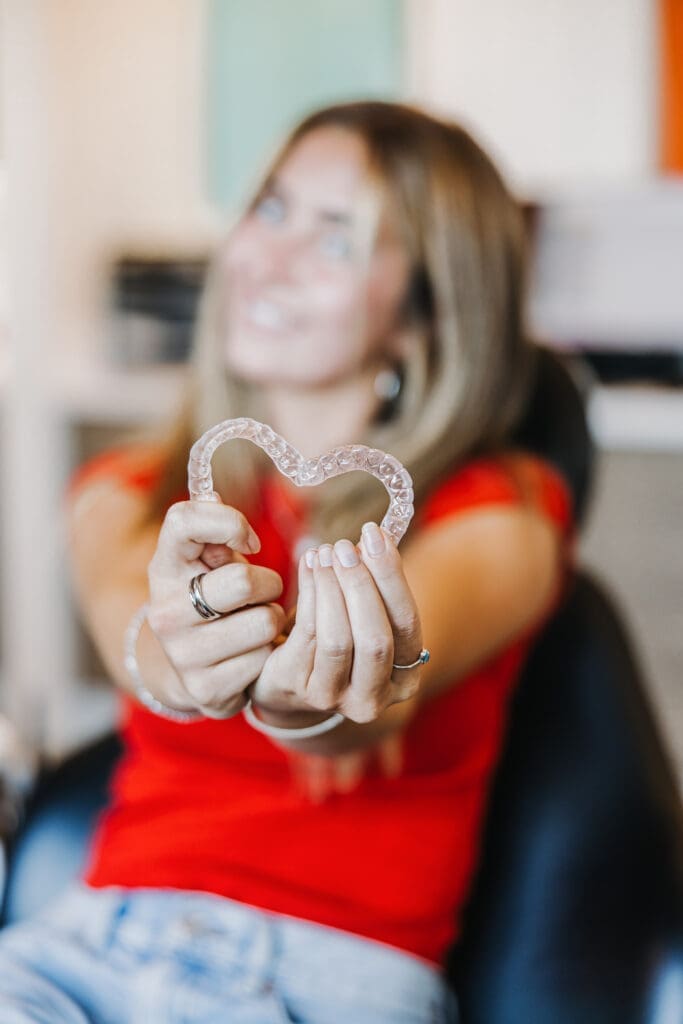
Invisalign can straighten your teeth without brackets and wires, but successful treatment still depends on what happens between orthodontic appointments. Because the aligners are removable, patients have more freedom than they would with traditional braces. That freedom also creates opportunities for small habits to interfere with progress.
Many common Invisalign mistakes are easy to prevent once you understand why they matter. Wearing your aligners consistently, changing them on schedule and keeping them clean can help your treatment remain comfortable and predictable.
At Ward+Campbell Orthodontics, we create a personalized treatment plan for each patient. Following that plan carefully gives every aligner the best opportunity to move your teeth as intended.
Mistake 1: Not Wearing Your Aligners Long Enough
The most common Invisalign mistake is simply leaving the aligners out for too many hours.
Clear aligners only move your teeth while you are wearing them. The American Association of Orthodontists explains that clear aligners generally need to be worn for 20 to 22 hours each day, or according to the schedule provided by your orthodontist.
That usually leaves enough time to remove them for meals, drinks other than water, brushing and flossing. However, those short breaks can add up quickly.
For example, you might remove your aligners for breakfast, leave them out while drinking coffee, take a long lunch and then forget to put them back in after dinner. Even though each break seems reasonable, your total daily wear time may fall well below the recommendation.
How to avoid it
Put your aligners back in as soon as you finish eating and cleaning your teeth. A phone timer or wear-tracking app can help if you frequently lose track of time.
Consistency matters more than trying to make up for poor wear later. Wearing aligners correctly every day is one of the best ways to stay on schedule.
Mistake 2: Eating With Your Aligners In
Unless Ward+Campbell has given you different instructions for your treatment, remove your Invisalign aligners before eating.
Chewing while wearing them can scratch, warp or crack the material. Food can also become trapped between the aligners and your teeth, creating discoloration and making the trays smell unpleasant.
Even soft foods may damage the aligners or place forces on them that they were not designed to handle.
The simple rule is:
- Remove aligners before eating.
- Store them safely in their case.
- Clean your teeth before putting them back in.
Removing them correctly takes only a moment and can prevent the need for a replacement tray.
Mistake 3: Drinking the Wrong Beverages While Wearing Aligners
Plain water is generally the safest drink to have while your aligners are in place.
Coffee, tea, soda, sports drinks and wine can discolor clear trays. Sugary and acidic drinks may also become trapped beneath the aligners, where they remain in contact with your teeth longer than they ordinarily would.
Hot drinks create another concern. Excessive heat can distort the aligner material and affect how the tray fits.
Remove your aligners before drinking anything other than water. Afterward, rinse your mouth or brush your teeth before replacing them whenever possible.
Mistake 4: Putting Aligners in a Napkin or Pocket
A clear aligner wrapped in a napkin can look exactly like trash. Aligners are frequently lost in restaurants, school cafeterias and food courts because someone placed them beside a plate and forgot about them.
Pockets and purses are not much safer. An unprotected aligner can become bent, cracked or contaminated.
Keep your Invisalign case with you and use it every time you remove your trays. A case is easier to spot, protects the aligners from damage and reduces the chance of them accidentally being thrown away.
It helps to keep an extra case in a frequently used location, such as:
- Your backpack
- Your vehicle
- Your desk
- Your purse or work bag
Avoid leaving aligners or their case in a hot vehicle because high temperatures may distort the trays.
Mistake 5: Switching to the Next Set Too Early
It can be tempting to move ahead when a new aligner seems more exciting or when you believe faster changes will shorten treatment. However, each tray is designed to complete a particular stage of tooth movement before the next one begins.
Changing too early may prevent the current aligner from finishing its work. Your teeth may then fail to match the position built into the next tray.
Follow the exact change schedule Ward+Campbell provides. Depending on your treatment plan, you may wear each set for a specific number of days before advancing.
Faster is not necessarily better. Predictable movement requires giving your teeth and supporting tissues enough time to respond safely.
Mistake 6: Wearing the Same Aligners Longer Without Asking
Switching too soon can cause problems, but wearing a set longer than prescribed is not a good way to adjust your schedule independently either.
Patients sometimes extend a tray because they forgot when to change it, lost the next set or did not meet their wear-time goal. Wearing an aligner longer is sometimes the correct instruction, but that decision should come from your orthodontic team.
Contact Ward+Campbell if you are unsure whether to advance. We can tell you whether to continue wearing the current aligners or move to the next set.
Mistake 7: Ignoring an Aligner That No Longer Fits Properly
A new aligner may feel snug at first. That pressure is expected because the tray is beginning the next stage of tooth movement.
However, a tray that has large gaps, repeatedly lifts away from certain teeth or will not seat fully may indicate that your teeth are not tracking as planned. This can happen after inconsistent wear, an incorrect tray change or a problem with an attachment.
Do not force a severely misfitting aligner into place or move through several additional sets hoping the problem resolves itself.
Contact our office when:
- The tray will not stay seated.
- A large space remains between the aligner and a tooth.
- An attachment comes off.
- The aligner is cracked or badly distorted.
- You cannot comfortably place or remove it.
- Your next aligner does not seem to fit.
Addressing a fit issue early is usually easier than waiting until several trays no longer match your teeth.
Mistake 8: Cleaning Aligners With Hot Water
Hot water can warp aligners. Once distorted, a tray may no longer apply pressure in the correct places.
Use cool or lukewarm water when rinsing and cleaning your aligners. Clean them gently according to the instructions provided by Ward+Campbell. Invisalign also offers products designed specifically for cleaning aligners, but you should never assume that a household cleaner is safe simply because it removes stains.
Avoid using:
- Boiling or very hot water
- Bleach
- Harsh household cleaners
- Strongly colored soaps
- Abrasive brushes or cleaners
Rinse the trays whenever you remove them so saliva and debris do not dry on the surface. Clean aligners are more comfortable, less noticeable and less likely to develop odors.
Mistake 9: Putting Aligners Back Over Dirty Teeth
Brushing and flossing remain essential during Invisalign treatment.
When you place an aligner over food particles or sugary residue, the tray can hold that material against your teeth. This may contribute to plaque buildup, bad breath, staining and tooth decay.
Ideally, brush and floss after eating before putting your aligners back in. When brushing is not immediately possible, rinse your mouth thoroughly with water and clean your teeth as soon as you can.
Do not leave the aligners out for hours simply because you cannot brush at that moment. A thorough rinse followed by replacing them is usually better than missing a large portion of your required wear time.
Mistake 10: Losing Track of Which Aligner You Are Wearing
Invisalign treatment involves a sequence of trays that must be worn in the correct order. Mixing up sets or accidentally skipping one can interfere with the planned movement.
Keep each aligner in its labeled package when it is not in use. Before switching trays, confirm that the number matches your treatment schedule.
It is also wise to keep your most recently completed set rather than immediately throwing it away. If your current aligner is lost or damaged, Ward+Campbell may temporarily instruct you to return to the previous set until we determine the best next step.
Do not jump forward to a later tray unless we specifically tell you to do so.
Mistake 11: Throwing Away a Lost or Damaged Aligner
Some patients avoid contacting their orthodontist because they are embarrassed that they lost a tray or believe the issue is too minor to mention.
Lost and damaged aligners happen. What matters is responding correctly.
Do not go without an aligner for several days while waiting to see what happens. Teeth can begin moving away from their planned positions, and the next tray may no longer fit.
Call Ward+Campbell and tell us:
- Which aligner number you were wearing
- How many days you had worn it
- Whether you still have the previous set
- Whether the next set fits
- How the tray was lost or damaged
We can then recommend the safest next step based on your individual treatment plan.
Mistake 12: Skipping Orthodontic Appointments
Invisalign may require fewer in-office adjustments than braces, but regular orthodontic visits are still important.
During these appointments, we evaluate whether your teeth are tracking properly, check your bite, inspect your attachments and make sure your treatment remains on course. We may also provide your next sets of aligners or adjust the plan when necessary.
The official Invisalign treatment process includes regular checkups so your provider can monitor your progress throughout treatment.
Skipping visits can allow a small fit or tracking problem to continue unnoticed. If you need to reschedule, contact us promptly so too much time does not pass between evaluations.
Mistake 13: Expecting the Aligners to Do All the Work
Invisalign technology is advanced, but it still requires patient participation. Your treatment plan cannot compensate for trays that remain in their case for much of the day.
Your responsibilities include:
- Meeting the prescribed daily wear time
- Changing trays on the correct date
- Keeping your teeth and aligners clean
- Using your aligner case
- Attending scheduled appointments
- Contacting us when something does not fit correctly
- Wearing elastics or using other accessories as directed
Patients who build these habits early often find that Invisalign fits comfortably into their regular routine.
A Simple Daily Invisalign Routine
You do not need a complicated system. A consistent routine can prevent most Invisalign mistakes.
In the morning: Remove and clean your aligners, then brush and floss before putting them back in.
During meals: Store your trays in their case rather than wrapping them in a napkin.
After eating: Brush when possible, or rinse thoroughly before replacing your aligners.
Throughout the day: Keep track of how long your aligners are out.
Before bed: Clean your teeth and trays carefully, then confirm that the aligners are fully seated.
This routine protects both your oral health and the progress of your treatment.
Keep Your Invisalign Treatment Moving Forward
Most Invisalign mistakes are not dramatic. They are small habits repeated over time: leaving trays out after meals, changing sets without checking the schedule or failing to call when an aligner stops fitting.
Correcting those habits early can help you avoid delays and keep your treatment moving toward the smile planned for you.
Ward+Campbell provides personalized Invisalign treatment in Twin Falls, ID with professional supervision from the first scan through the retention phase. We will explain your wear schedule, monitor your progress and help when an aligner is lost, damaged or not fitting properly.
Whether you are considering clear aligners or have questions about your current treatment, request a free consultation with Ward+Campbell Orthodontics. We can evaluate your smile and determine whether Invisalign is the right choice for your needs.